
Upholstery care · A Tuftwright guide
How to read your couch's cleaning tag before booking upholstery cleaning
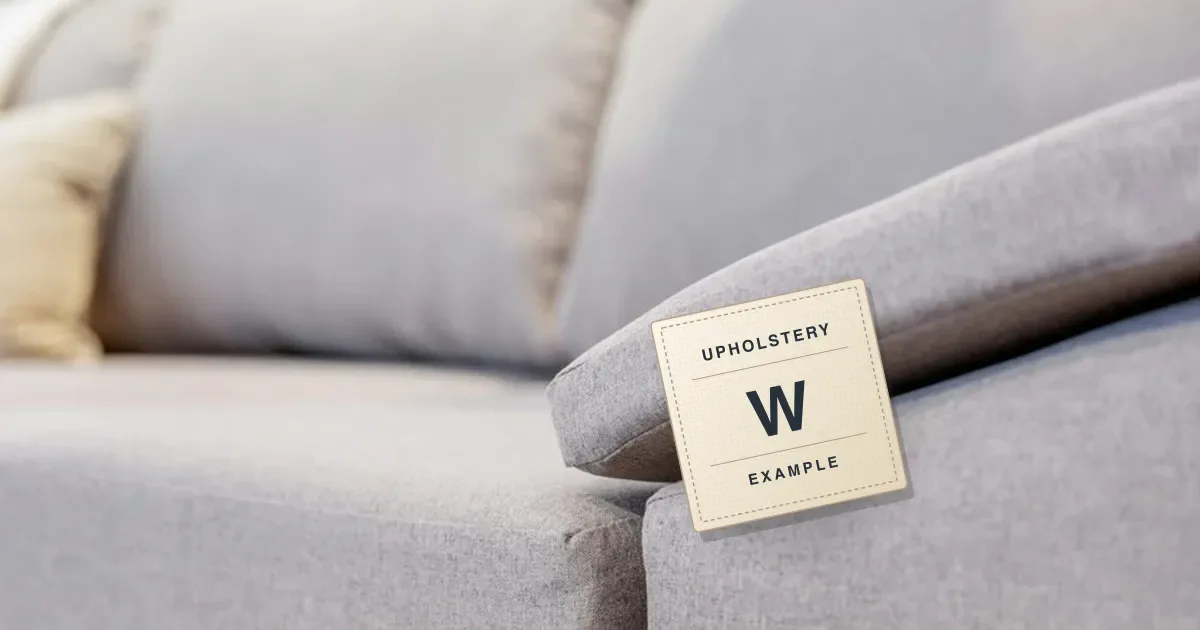
Those little letters are a useful starting point, not a complete cleaning plan. Read them alongside the furniture maker's instructions before adding water or another product.
First, find the actual care instructions
Look under a loose seat cushion or on an accessible label beneath the furniture. Don't tip a heavy sofa just to find it. A receipt, model number or the maker's product page may help you locate the instructions instead.
Ashley identifies these tag locations in its furniture care guide. Read the cleaning directions, not just a fiber-content or filling label. Your exact furniture's guidance takes priority over a general code chart.
What W, S, W/S and X mean
These are common spot-care categories, summarized from Ashley's cleaning-code guidance. They don't identify the fiber or promise that every professional method is suitable.
- WWater-based spot care
Generally points to a water-based upholstery shampoo or foam used as the maker directs. It is not permission to soak the fabric, wash the covers or use an extractor.
- SWater-free solvent care
Calls for the maker's specified solvent-based care, not water. Ask about a suitable method rather than treating it as an ordinary water-cleaning job.
- W/SEither, within the instructions
Also written WS, SW or W-S. The maker may allow water-based or solvent-based spot care. That choice still depends on the product, fabric and exact instructions.
- XVacuum or light brushing only
No water-based or solvent-based liquid cleaner. Tuftwright treats X-coded upholstery as vacuum-only, not a wet-cleaning booking.
Tell us what the couch has already been through
You don't need a research project before asking for a quote. These details help us review the work:
- The piece you want cleaned, such as a sofa, sectional or armchair, and the care code if you know it.
- What spilled, any pet contamination and what you hope cleaning will address.
- Any products or home machines already used. A product name is more useful than “a cleaner.” Don't add another treatment just to prepare for the visit.
- Delicate fabric, loose seams, faded areas or other damage you already know about.
A code doesn't guarantee stain or odor removal. We review suitable methods and the agreed scope before work starts. See our upholstery service, current prices and fabric limits for what a standard clean includes.
Missing tag? You can still ask for a quote
Tell us it's missing or unreadable, and share the maker or model if you know it. An unidentified fabric needs review; that is not a reason to guess at a cleaning code or try water to find out.
A photo of the label or concern can help if the fabric is unknown, delicate or there is a material concern. It's optional, not a routine booking requirement. Natural, delicate, antique or unusually valuable pieces also need review. We do not clean silk upholstery.